Friday, May 16, 2014

For Sale!!!

1984 model, Indian (the brown people in Asia) male, raised a Christian (believed to have descended from the “original” first batch of converts by Saint Thomas himself, documentation will be provided on request) but can take up any religion on demand even atheism and agnosticism.

30 years, 5’10”, 80 kgs, fair (on the scale set by the boy’s lovely grandmother), athletic (means not fat but a bit pudgy around the edges), with passable looks and receding hairline.

Is known to provide intelligent conversations when required and can make people actually laugh. He has a penchant for fine food and dislikes Modi with a passion (reversing that would require a very large additional fee). You can use him as your unsellable daughter’s husband or as a person to look down upon people or ask him to run your company (No guarantees on performance) or as an ornament for your lovely home.

We are selling him at a discount owing to his age and general failure to be successful (i.e. he is not in America).

We are taking bids starting at Rs.30,00,000. Maintenance cost per month Rs 40,000+DA+ TA+ Medical (dental included) + reimbursement of incidental expenses (like gifts for aforementioned wife)

Photographs of this fine property can be made available on request.

Tuesday, February 28, 2012

Questioning Efficacy

My cynicism is a result of the seething mass of filth that surrounds us. The more wiser I grow the more further I am from the illusion of utopia. Our existing models of execution of life's plans are getting defunct and its efficacy is becoming questionable.

Democracy doesn't work cause it fails to eliminate concentrated centres of power.

Globalisation is now becoming counter productive. Too much of a good thing can be dangerous.

The more easier we try to make our lives, the more complicated it becomes

A man is defined by his degrees and experience rather than Zest, Grit, Self-control, Social intelligence, Gratitude, Optimism and Curiosity.

We live in constant fear and uncertainty.

Food is left to rot rather than feed the poor.

Banks cannot be 'banked upon' anymore,

However, the middle class is still getting screwed.

So, I have decided to start a series of posts which analyse where we are going wrong. I am calling it 'questioning efficacy'

Friday, February 24, 2012

Questioning Efficacy- Appraisals

I just did my appraisal form. I had to be inventive enough to repaint my mediocrity to instigate an image of competence. Every 6 months,employees of various organisations go through the same ordeal of lying to themselves that they did something substantial, they believe it so hard that they fight tooth and nail for it to be recognised as true. The fact of the matter is the 90% of the time it’s the suck ups who get the cake. The guy who comes in before the boss and leaves after him, the guy who finds the all boss’s jokes to be the best that he has ever heard, the guy who is from his own town, the guy who developed a cigarette addiction just because his boss had one. You know that guy; he’s the asshole who stole your ideas.

For me, the whole process is a bit amusing, as the day comes nearer, I see people scrambling with wild ideas to increase productivity,the worst I have heard was a training for “better googling” with ppts by a guy whose aptitude on Googling, was quite suspect. Sure, he can search out porn for you (that’s basic computer literacy), but nothing else.

The worst part is, people buy this, especially your manager. I often wonder if I am specially equipped to see through crap like this. People aren’t idiots, actually they are. I wonder how people, the least able (can’t see through crap) go up in life while people who can, are marooned on an island of ‘bad attitude’.

The sooner we realise the futility of appraisals and the effectiveness of sucking up, the sooner hikes and promotions will come your way. So, go ahead, be that asshole

Wednesday, February 22, 2012

Getting Out of Recession


Economic books have been fervently revisited in the recent past by economists trying to find out a way out of this drab recession. The race to find the ‘optimum’ solution has led to two prominent schools of thought to come into the picture. One tells the government to spend and the other to tighten the purse strings.

Keynes helped the world to get out of the Great Depression by prescribing spending; spending by the government on roads and infrastructure. This led to people getting employed and they got money to increase consumption, this led to a revival of the industries and then the economy.

The 2008 recession was caused by people spending too much and that too, money that they didn’t have. It was a disaster waiting to happen. Economists didn’t regulate this because nobody says stop when the going is good. The world did its share of bailouts and managed to sprout a new life. The greedy bankers had lavish parties and their large bonuses were plastered all over the newspapers. People clearly didn’t like that (Occupy Wall Street), any spending of public money was curtailed and whatever little was done, was done very cautiously.

Meanwhile, the idiots in Europe had forgotten to stop spending since the war, so they had taken billions of Euros in bonds and loans that they couldn’t pay back even if their cheeses depended on it. Fortunately, they had the EU to take care of their fat behinds, actually only Germany was there, so Merkel being a proper Margaret Thatcher told them to tighten their belts if they wanted money for food and wine.  That’s how “Austerity” came into the picture. People working in the government, which is actually a huge number, are now forced to drink only €1/ bottle wine.  People lose their confidence, consumption reduces, companies try hard to reduce their costs so they export jobs, people lose their jobs, consumption reduces further and the cycle continues

Where is the money? Let’s rewind back to pre-2008.  People bought property, pushing property prices, banks realising this opportunity starting giving sub prime loans, these were then packaged and sold off to idiots, the banks then had more money to lend, so they gave to more sub prime people, the prices went up again, the sub prime people took more loans on the same property by getting it reassessed. People spent this money by consuming goods and investing in more property. So, all this money is locked up with big companies (Apple has more than $100 billion in cash reserves), with banks and with shrewd people (the 1 percent-ers)

The problem now is that the governments and the middle class don’t have any money. Money being with the rich is useless in the bigger scheme of things. Unlocking this money is the only way out of this mess. 


If we are going with ‘spending’ then we should get them to invest in things by giving them huge deal sweeteners. So they will spend for their own profit and incidentally, revive the economy. 


If we go with ‘austerity” then we should force the money out of them by imposing huge taxes and regulation, so the government can use it to revive the economy.However, the problem is that the rich run the governments.


Guess, we'll have to beg the rich to get us out of this rut.


Tuesday, February 21, 2012

Iran


After what feels like a lifetime, I am going to start a new series of blog posts. My career which has gone to an all time low has failed to produce an outlet for me. I have decided to write again as desperate attempt to keep my faculties from shutting down.

Iran seems to be the flavour of the month. The Arab Spring has left the Middle East in confusion and uncertainty. To those of you who are just joining the show, the Arab Spring was a round of protests that sparked off across the Middle East starting from Tunisia. This led to several dictatorships to being toppled and newly elected governments to come up.

Let’s try to understand the Iranian situation a bit

Iran has oil, lots of it. The second largest reserve of conventional oil in the world
So naturally, the world, especially America would be highly interested in it.

Iran’s incumbent government believes it has the power to be a dominant force in the Middle East. So, as a show of strength, they have decided to pursue a nuclear programme.

Iran also has a strategic advantage over the Strait of Hormuz, which handles major oil traffic from Saudi Arabian ports. US interest in this area has been prominent with the establishment of a base on the eastern coast of Saudi Arabia and patrolling by destroyer class ships since time immemorial

Israel doesn’t like Iran very much because the latter has been funding the Hamas and the Hezbollah to wreak havoc onIsrael.

The US is run by the Israelis is a little known fact either by sympathy or by being present in the power corridors of the US

The US has been looking for a reason to attack Iran since Mahmoud Ahmadinejad came into power in 2005 which coincides with Israel’s falling out with Iran. The progress of the nuclear program has now fallen into the lap of the US. They have quickly enforced sanctions on Iranian trading especially its oil.

Sanctions have been successful in halving the Iranian rial and putting a cash crunch on the country.

India has opposed the sanctions and continued importing oil from Iran

India and China are major importers of Iranian oil. 20% of India’s crude imports are from Iran. ONGC, in 2009, announced plans of investing $5 billion in Iran to set up a gas field.

India cannot go ahead with the sanctions because any such move would affect crude prices unfavourably. Saudi has promised to up its production to cover any glut that stopping Iran crude would create. However, India knows better. The very fact that there might be an attack on Iran has raised the crude price to $120 per barrel this amply shows how volatile the market is. India can’t have that as the UPA government has just about managed to soften inflation.

Israelis targeted in bomb attacks in Delhi and Bangkok.

Israel blames Iran for it. Delhi opposes any such view.

Syria is still fighting away at their incumbent despot President Bashar al-Assad who was responsible for the Hama Massacre which was so gruesome that it gave rise to the term “Hama Rules”, which means No Rules.

Iran supports Syria

The UN has not done anything substantial in quelling the problem in Syria because India and Chinahas opposed any such ruling to protect their interests with Iran.

What will be the outcome?

Republicans will take power in the US and along with the Israelis, would attack Iran. Destroy and decimate it, then divide the oil among them.
Americans will make movies and sitcoms based on the war and sell it to an eager audience

Who will gain from all this?

Certainly not the people of Syria

Tuesday, February 22, 2011

Freedom

A wave of unrest sweeps across the Arab world as they have decided to become citizens rather than subjects. A revolution which is brought about by people who want a better life by standing up to tyranny, there are no charismatic leaders, just a self organising system aided by the internet to mediate aspirations into actions.

The media is filled with opinions on what, how, why and outcomes of these happenstances. Jaswant Sinha, talked very poetically about the revolution in Egypt. It was a fantastical article encompassing utopian dreams and faceless heroes.  It really begged a reality check on how the world’s largest economy is doing in realising these dreams.

How different is our country from any of these? 1% of the population has most of the wealth and they are still robbing us blind. When was the last time a true voice was raised against injustice? (I mean, without any ulterior motives). Half of the country starves. Half of the children are malnourished. We don’t have food security, potable water, decent roads, working government offices, the list goes on.

India is a revolution waiting to happen.

“Can we look beyond the stereotypes offered by the media and see that the Egyptians and Tunisians are now daring us to be FREE”- Dani Hind, “From Protests to Revolution”

Friday, September 24, 2010

Name Association

Paris- Eiffel Tower

New York- Statue of Liberty

London- Big Ben, the grand old lady (the queen)

India- A congested road with dilapidated cars, honking at the cow insouciantly chewing cud and the humble stray dog resting on the sidelines.

Stereotypes and name association have confidently propagated such an image for the simple reason that it’s true. The more cosmopolitan among us would scream murder and try to disassociate themselves, while the “intellectuals” would propose wild Chindogus that are just that and the nonchalant would just sigh it away. The stray dog however has recently been the cause of a bit of black humour among these circles.

The recent opening of the Delhi Airport was a matter of National pride. The state-of-the-art facility was commended all over. Emirates was kind enough to send their big-boy jet -the A380 to mark the occasion. The new retractable ramp was waiting for its esteemed guest to dock while officials and the usual soiree of airs and accents were waiting to greet the dignitaries. However, the humble stray decided to make its appearance, delectably on the approach road to the ramp. What ensued was a comical ruckus of officials running around the dog, trying to shoo it away, while a hierarchy of screaming took place starting from the CEO to the groundskeepers.

Another pleasant appearance of the stray dog was when a bunch of officials for the Commonwealth Games discovered that their living areas were not exactly empty. It seems that the previous tenants ‘the strays’ were not given their appropriate notice periods. But as they were good upstanding Indian strays they heeded to the shooing away and moved out.

The reality that our thundering economy is not inclusive and our neglect of the little things would somehow wreak havoc on our grandiose plans seems to be symbolically represented in these scenes.

Wednesday, September 15, 2010

Are we responsible? - Part 2

“[God] is the greatest democrat the world knows, for he leaves us “unfettered” to make our own choice between evil and good, he is the greatest tyrant ever known, for he often dashes the cup from our lips and under cover of freewill leaves us a margin so wholly inadequate as to provide only mirth for himself at our expense…”- Mahatma Gandhi

In my last post I came to an abrupt ending about how God is responsible for everything and we couldn’t hold anybody accountable for their actions as they were pawns in a bigger and grander plan. The theory seemed plausible as it appealed to your abstract mind and it also went along with the delusions which we have come to accept, until I mentioned the serial killer and the paedophile. Suddenly, a Pandora’s Box opened, filled with emotions that engulfed the abstract mind refuting to qualify it.

Let’s revisit the issue again. We established the actual absence of freewill as our decisions would be based on our prejudices, genes, upbringing and many other variables, moreover, the options we choose from, is also not controlled by us leading us to believe there is some higher power that has authority over it.

Is that entirely true? If we look closer at each decision, we realise that the decision to choose between right or wrong still lies with us. If we can decide between right and wrong aren’t we then, partially responsible for our actions? I also talked about how each decision inadvertently becomes a factor for a future decision. Zooming out into a more macro view we can conclude that an eco-system then becomes responsible for its own actions.

Recent research has pointed out that religion and its offshoots were evolved as a necessity for the human race to survive because it set the rules for distinguishing right and wrong and also encouraged to work for the common good rather than for the ‘self’. The common good often included the good of the ecology too. Many civilizations have long perished (ecocide) as a punishment for ignoring the common good.

The question of God’s existence still remains unanswered. Everybody has to have delusions to keep them going, the more deluded they are, they more happier they seem to be, but don’t be deluded by our apparent inability to control the future

“Choose to believe never inherit it”

Tuesday, August 17, 2010

Are we responsible? - Part 1

Coming from work, you decide to have a chocolate tart. Upon checking your wallet, you find you have just enough for one from the deli down the road. You then walk up to it to find a social activist standing in front of it, asking you to donate money for a cause, in which you, incidentally, believe in strongly. You can either chose to buy the tart or put the money in the tin. The choice is completely up to you. It is your “freewill” to make a decision.

Consider this argument

(1) You do what you do — in the circumstances in which you find yourself—because of the way you then are.

(2) So if you’re going to be ultimately responsible for what you do, you’re going to have to be ultimately responsible for the way you are — at least in certain mental respects.

(3) But you can’t be ultimately responsible for the way you are in any respect at all.

(4) So you can’t be ultimately responsible for what you do.

You can’t be ultimately responsible for the way you are (mentally), because the genes you inherited and the past experiences you have been through, is not your doing. Therein lays the argument between freewill and determinism or in simpler terms, the argument between you deciding your own fate and God charting it out for you.

We believe that we are free to decide between choices. However the choices and the biases we have are the constraints that we can’t control. It’s determined by the billions of decisions made by the millions of creatures throughout time.

Let me elaborate that with the chocolate tart example, you must have felt hungry because you couldn’t eat anything with tea because you had a phone call from your client, who for some reason had decided to call at that particular moment when the tea trolley comes along. The chain could go on like that. The social activist guy decided to stand in front of the deli because of another chain of reasons. His choice of social cause to support is another chain and your inkling to that particular cause is another one (Example: The activist might be rooting to reduce cruelty against dogs because his girlfriend is into it and you might be inclined because you love dogs). There are many other chains of reasons like a cause and effect machine leading to that particular instance where you had to take a trivial decision.

The existence of freewill then becomes questionable. Mankind has attributed the job of determining the choices and creating our biases to God. This explained everything that humans couldn’t fathom and made our lives simpler.

Let’s try to bring some math into the discussion by attributing a variable to a decision. The value of the variable is inadvertently linked to the billions of decisions that led up to that particular decision. To buy the tart, donate the money, or just walk off, can be the most likely values for the chocolate tart problem. However, each decision has a probability component based on your past experiences and prejudices. We may argue that we are capable of taking rational decisions, but Freud came along and proposed that the unconscious has a bit more say in things than we perceived it to have. The existence of such a probability then definitively proves that “freewill” is a tad bit exaggerated.

Since freewill is out of the picture, then by default, God should win this argument hands down. He plans out the entire existence of nature and also makes us think that it was our own idea. Charles Baudelaire once mentioned "The greatest trick the Devil ever pulled was convincing the world that he didn't exist”. So is God, the devil himself?

If the theory of god being responsible for everything holds water; that implicitly implies that we are not responsible for our actions. We just have to wait out this “menial” existence on earth, which will by any means, progress according to the master plan.

So the serial killer, the pedophile, even Judas all stand vindicated, as they were just pawns for something much more important.

“I believe in God, I just don’t like him”

This a two part essay.. The next part will be uploaded next week

Friday, July 30, 2010

Disconnect

FOOD_11_152967g

Problem

  • Research suggests that as compared with 410 million multi-dimensionally poor people resident in 26 of the poorest African countries there are as many as 421 million in just eight of the poorer Indian states (Bihar, Chhattisgarh, Jharkhand, Madhya Pradesh, Orissa, Rajasthan, Uttar Pradesh, and West Bengal)
  • 46 per cent of the children in India are malnourished
  • 10,688 lakh tonnes of foodgrains were found damaged in different FCI warehouses as on January 1, 2010
  • India loses food grains worth Rs. 58,000 crore every year due to lack of storage facilities
  • Food inflation has remained above the 16 per cent level for most part of the year
  • India has been self sufficient in food grains since the 70s but still half of our population starve.

Reasons

  • Lack of infrastructure especially inadequate storage facilities
  • Public distribution system is fragmented and steeped in bureaucracy.
  • Lack of a central distribution and utilisation plan.
  • Movement of goods (transport through air, road, water, rail etc.) among the most inefficient in the world. 14% of our GDP is spent on logistics alone.
  • Alleged existence of a private lobby that blocks PDS distribution to drive up prices

Sure, we may be

  • Trying to go to the moon
  • Trying for a permanent seat in the Security Council,
  • A member of the “emerging countries” list
  • Shipping aid to Africa and Afghanistan
  • Having our own currency symbol, which some “experts” say, is a step towards becoming an important economic power
  • Growing at an enviable 9%

It all just seems quite futile.

Friday, July 9, 2010

A Big Brain

Cogito Ergo Sum means ‘I think, therefore I exist (am)’. It answers the question of our existence of whether we exist or if we are characters in some chap’s wild imagination. Well now the question is- How do we think? What happens in our brilliant brains that makes us think?

Microprocessors,the brains of computers and smart devices; are made up of millions of components called transistors. Each one just makes one decision- to be in 0 or 1 state. Programmers, with help of complex algorithms employ many of these simple transistors simultaneously to create computing power. A map of internet connections

Our brain is made up of 50-100 billion neurons connected together with 1000 trillion synaptic connections as in a microprocessor. If you take a single neuron, it doesn’t exhibit intelligence as such. When billions of them are connected together, something amazing happens- Intelligence.

Now let’s consider another network- the internet. An estimated 1.8 billion users are connected to this big web. Millions are getting hooked up every month. The advent of smart phones and cheap data rates are pushing these figures off the roof. Nowadays there are about 500-700 million transistors in a single processor. If we were to consider the trillions of transistors connected together through the internet, it does come very close to the number of neurons in our brains. Sure, the number of synapses is still very small, but wouldn’t it be enough for primary intelligence?

So the big question is, whether the internet is aware of its self? Can it think for itself? If so, by Cogito Ergo Sum, does it mean that it exists?

-This can be also explained by Swarm Intelligence, like how Craig Reynolds did with Boids to explain flocking behavior of birds-

Monday, July 5, 2010

‘80s

“I pity the fools who were born in the 80s”. Mr T would have said something like that. I bet a lot of people don’t know who Mr T is and that is exactly my point. I felt the first pang of the gender gap when I was talking to my little brother (now not-so-little). I was taken aback by his priorities, because he had them.

T71_0235a_Lisbon_Generation GapPeople born in the late 80s and the 90s( you can add 3 years to people who were bought up in villages) were exposed to a liberalized India, an India were western culture-aping was possible. This exposure, however small had a profound effect on the kids, they now had a clear direction to follow. The 80s guys are confused; they are stuck in a rut to either adhere to tradition or convention, to shake hands or to hug, Def Leppard or Lil Wayne.

This generation has a constant need of reaffirmation of their acts; they are torn between individualism and obligations. Their tryst with the ‘Culture of self’ has left them shocked and awed at the same time. They envy the people who accomplish that and condemn them for their lack of social sense.

Creating a positive anosognosia which suspends reality or rather becoming oblivious to it, to muster up a list of priorities and sticking to it seems to be the only way this generation can hope to cope.

Friday, June 4, 2010

Fickle

All the women who knew me well have complained that I am a hard hearted man and my allegiance lies with my family and nothing else. They also lament to the fact that I could not form a lasting relationship with anything albeit human or materialistic, it usually followed the lifetime of a fad. So, naturally, I didn’t have an idol, I didn’t have a favourite book, musician or car. I just changed it to suit my latest fad.

These fads are bought about by articles, books, movies, music and mostly images. Capturing a moment in time which can instil the whiffs of inspiration is truly magnificent. To me, it’s not the lighting or the tone of the image; it’s the characters the image tries to define. Here are some of those images


A clown trying to bring some cheer to children who lost their homes to the tropical storm Agatha  in Guatemala. Reminded me that there is goodness in people even in times of turmoil, rather than what Stephen King wants us to believe.


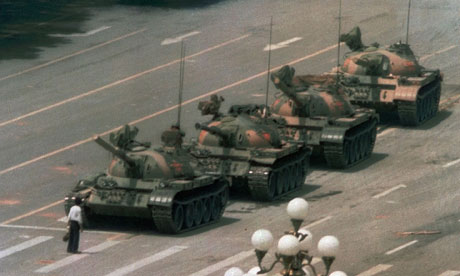
Resistance: An image from the Gaza strip, taught me that its resolve and not strength that matters. A similar image would be Tiananmen square, one which inspired a whole generation


This image represented reality- the shocking reality of malnourishment in India. It broke through the walls of my comfy cocoon and put into perspective the harsh but undeniable reailty.

Thursday, May 27, 2010

Greed

1954- Endosulfan, a revolutionary new pesticide was developed
1976- Widespread use of Endosulfan in farms and plantations in India
1979- Evidence of toxicity and bio-accumulation seen with birth of malformed cattle
1990- Children born with limb malformations, congenital anomalies, mental retardation, physical deformities, cerebral palsy,epilepsy, hydrocephalus

15 villages in Kasargod district in north Kerala, owing to the presence of large cashew plantations, were among the most affected. It was described as the biggest disaster since the Bhopal gas tragedy. Endosulfan’s toxicity and its effect on humans are well documented and many other countries had to deal with the same situation.


So tell me, why India is still the largest producer of Endosulfan? We produce a whopping 9500 tonnes of it, 4000 for domestic use and 4500 for export. The companies involved in it are Excel Crop Care, Hindustan Insecticides Limited (a govt. company) and Coromandel Fertilizers. In fact, India went the extra mile to make sure that it was not included in the Stockholm and Rotterdam conventions, which aims to ban the substance throughout. In 2001 the Kerala government banned it in the state, but it is still used in the rest of the country.

Now, think of all the people still exposed to this substance without even knowing the consequences. Think of their children.

If you want to know more about this tragedy you can visit the link below. Be forewarned: It is not for the faint hearted, as the pictures in it are quite graphic

Monday, May 24, 2010

Adbusters

A suggestion from a friend introduced me to ‘Adbusters’. The tagline ‘journal of the mental environment’ best describes the magazines intentions. This particular issue talked about Ecopsychology, on how the world is coping with the bitter truth of our increasing footprint on nature, laying the contents according to the Kübler-Ross model or the more familiar, ‘Five stages of grief’- Denial, Anger, Bargaining, Depression and Acceptance.

The description for bargaining was what caught my eye. It’s more relevant as the world powers realise their addiction to oil and need for drastic change, case in point- Copenhagen. Freedom and abundance gave birth to generations with bottomless want of consumption, so any restrain would be cutting into freedom- a basic right. Restraints brought about by depleting resources are now more in the form of monetary measures ensuring the ‘poor man’ still struggles in the pit of economic degeneracy.

Bargaining

“In an effort to protect what matters most- we sacrifice our pawns. We lower the thermostat and ease of the gas, surrendering small degrees of comfort and time. We change the colour of our consumption, adopting a greener model of consumerism and transforming each purchase into an act of environmental defence. We pull back, surveying the board and waiting patiently for the technological salvation that will surely be delivered from distant labs and ivory towers. And when all seems lost we pray. We’ll do anything- well, almost anything- to stave off planetary death and protect our role as kings”

Tuesday, May 18, 2010

The Karzai Itch

Hamid Karzai after taking over the helm of Afghanistan has probably not slept a day. He figures in the news lately as he has become quite a nuisance to the man in the White House. He should be a nuisance, considered that he’s trying to bring in peace into a war torn country.

Afghanistan is a country filled with nomadic tribes, each of these tribes act autonomously over their areas of dominance headed by leaders named elders (probably in Pashto). The country has always been in conflict. In the past 30 years the Soviets tried to capture it, then it had its own brand of civil war which the Taliban won, then the US came in to take them out and hasn’t left it yet. The Taliban still reiterate with small skirmishes.

Karzai, trying to bring peace to the country decided to call a ‘Loya Jirga’, a meeting of the ‘elders’ and has also invited the Taliban. He wants to devise a peace plan wherein all the tribes are pacified.

Now, this puts the US, UK and Pakistan in a pickle. If peace does come out of it, Uncle Sam and the Old Blighty has to bring back its troops putting a halt to their long term plan of attacking Iran (which has one of the largest oil reserves in the world!) and also the huge reconstruction plans of the country by which America’s corporate world can sell off their mediocre goods and use their scrapped off assembly lines to create ‘value’.

Pakistan, of course, has other plans. If Taliban directly talks to the Taliban, they would loose their stronghold over them. So, they demand that Afghanistan talk to the Taliban through the ISI (Pakistan’s intelligence agency) as they finance them and in turn provide Mujahideen to do their dirty work.

The Taliban can either risk it and go to the Jirga hoping they’ll have some say in running the government or continue to be loyal to Pakistan.I hope they do come together for an amicable solution and let peace prevail.

Tuesday, May 11, 2010

LSD

usually procrastinate from watching Hindi movies, mostly because I can’t understand the language well. My interest in Love, Sex aur Dhokha spawned when I came to now that it was shot with an amateur camera. The descriptive ‘Amateur’ demeans the actual effort of the director; he’s faced with a bland canvas, unlike the usual background music and soft lenses which the professionals have. So, to effectively paint a scene, the director heavily relies on dialogue and editing, which needs talent.

Love, Sex aur Dhoka is an anthology movie weaving three different stories with each other. The love for voyeurism, brought about by the infamous DPS MMS Scandal of 2004 seems to be the inspiration for the movie.

“Love” tried to portray the relationship between a rich girl and a commoner, the usual Hindi fare, minus the bravado. The story tried to mock the well established romantic genre by bringing in the spoof element unsuccessfully; I tried hard to laugh at the slow running and the exaggerated emoting, in vain. Frankly, the girl in that was pathetic.

“Sex” was much more laudable as the characters did evolve a bit and manage to engage the viewers, but the plot did meander in between, which is quite forgivable. The guard was quite over the top making it feel like a cheap soap opera.  

“Dhokha”, swept everything out with a brilliant introduction and had continued to define the characters well. I loved the TV editor’s role of the ‘bitch’ and the crassness of the pop singer; the scene where he describes his trailer was pushing it though. I liked dhokha, because every character lived by the theme and the story was also able to carry it rather well. Throughout the movie, the attempt to bring about humor was entirely futile

On the whole, I applaud the effort. I feel such experimentations with a powerful canvas such as cinema should be encouraged more.

For those who haven’t seen the movie, you can read the plot from http://www.bollywoodhungama.com/movies/review/14205/index.html

Thursday, April 22, 2010

IPL

Modi should feel like an ass right now. I, for sure haven’t seen a worse foot in the mouth situation. This guy tried to screw Tharoor and he ends up getting right one in the ass. It’s naïve to think that IPL is squeaky clean at all. Along with the citied reasons of “love of the sport” and “regional patriotism”, the opportunity to launder some dirty money and for some Dons to invest their “hard-earned” monies are not to be disregarded.

Look at the bright side, the money that would have gone to financing feudal wars and maintaining their existing business of drugs, extortion and prostitution would be used instead to cater to the masses as entertainment and provide the much needed exposure to the local talent. I don’t give a rat’s ass to who owns what. In the end, it’s the players battling it out not the owners (would love to see a cat fight between Shilpa and Preity though!)

These things will pass; IPL will come out unscathed because it’s too big to fail.  Hope the Kochi team survives, till then CSK rules

Thursday, April 15, 2010

Milking it!

After what seems to be an eternity; I decided to write a post. The excuse for the hiatus was literary constipation brought about by anxiety, uncertainty and depression.  The insidious pleasure that a writer derives from pain and suffering to bring about incredulous manifestations are rather contrary to my modus operandi. By god’s grace it came to an end by Bangalore Stock Exchange making a mistake of hiring me.

It’s’ Microfinance’ that has caught my attention this time. Muhammed Yunus, the economist who started it all, remarked at an UN meeting, “We created microcredit to fight the loan sharks; we didn’t create microcredit to encourage new loan sharks”. I believe this statement says it all.  Microcredit, the darling of economists and celebrities alike was viewed as the solution to reduce abject poverty and to bring about financial inclusion, and it did with aplomb.

It all changed in 2007, the Mexican firm ‘Compartamos’ which started as a tiny non-profit organisation went public to amass $458million. Investors suddenly realised the immense potential of Microcredit, which is corroborated, as politicians have started to invest in such ventures through surrogates. The business model is quite sturdy. Money is taken from donations and banks at very low interest rates and given to Self Help Groups (SHG) which by design ensures that the risk is reduced to the minimum. The risk is further mitigated by imposing higher interest rates.

The world average interest rate charged by MFIs (Micro Finance Institutions) is a whopping 37%. This figure is highly dubious as actual figures are not available due to unaccountability of non-profit organisations. In some countries like Mexico, the average is 70% while some companies like Te Creemos charges up to 125%.

The problem of over lending also comes into the picture. Recent figures from Andhra Pradesh and Karnataka show that their coverage in some areas is 200 to 300%, that is, people have multiple loans at such high rates, often taken to repay previous loans. This could to lead to a debt spiral which defeats the whole purpose.

Legislation and governing bodies should be put in place to check such atrocities. In India, RBI does have a watchful eye, but the existing policies needed to be revised and adapted to bring MFIs under its more stricter purview and also to increase transparency.

Tuesday, February 2, 2010

The Washing Machine

A question that often quips up in conversations in these days is how you would spend your first salary (provided you get placed by ‘Team Usha’). It’s a perfect question to get a perspective of an individual’s priorities. The standard answer is to say that they would spend it on friends and family, call me a sentimentalist, I applaud that. The conceited of the lot say that they’ll spend it on clothes or a new phone or a new girlfriend, the list can be endless.

I, belonging to the latter would actually buy a washing machine, yes, a washing machine. Why? Because I consider it as the greatest invention after the automobile

Hear me out; nobody likes dirty clothes except for hobos and a few people in college who think it’s rather cool to wear them. I don’t know where they get that idea but it’s quite prevalent. So I’ve established need.

It is also one of the few innovations that have actually reduced effort. Some of you may argue that the microprocessor was a better example but think of it, your lives are more screwed up because of it. The constant pressure to keep in touch and be creative in your tweets or status messages is quite a vexation. Don’t even get me started on mobile phones. Washing machines are placid devices that don’t interfere with your life nor does it need your attention.

A front loading one is a perfect addition to any home. It’s multifunctional, it can be a table top for a round of cards, it’s the perfect height for ‘certain’ experimentations or for the more infantile pleasure of siting on top of it while it goes on spin dry. I have made up my mind though-a Siemens front loader is definitely in my list.